Posts Tagged ‘secure retirement income stream’


The Ultimate Wealth-Building and Retirement Strategy

Have you been disappointed by your 401(k), IRA or other retirement plan?  Conventional wisdom tells us these plans are the best way to save and invest for retirement. Yet following this advice has resulted in financial insecurity for most Americans.

Because of this, most baby boomers have been forced to postpone retirement an average of five years.1

I’m often asked how using the Bank On Yourself method to save for retirement compares to traditional plans, so I put together this short video that reveals seven reasons Bank On Yourself makes an excellent retirement plan alternative.

Click the play button in the video below and see how many of these seven advantages you’d like to have in your financial plan…

HOW TO ADD GUARANTEES AND PREDICTABILITY TO YOUR FINANCIAL PLAN…

Would you like to find out how big your nest-egg could grow – guaranteed – if you added Bank On Yourself to your financial plan? No two plans are alike – yours would be custom-tailored to your unique situation, goals and dreams. To find out what your bottom-line numbers would be, request a FREE, no-obligation Analysis today.

If you’re wondering where you’ll find the money to fund your plan, keep in mind the Bank On Yourself Authorized Advisors are masters at helping people restructure their finances to free up money to fund a plan. Here are the eight most common places they look.

1.  Bankers Life and Casualty Center for a Secure Retirement, May 2011

The Recession is Over… If You’re On Wall Street

There have been a spate of articles in the financial media recently encouraging retirees to catch up on savings shortfalls by investing as much as 40-60% of their nest egg in the stock market.

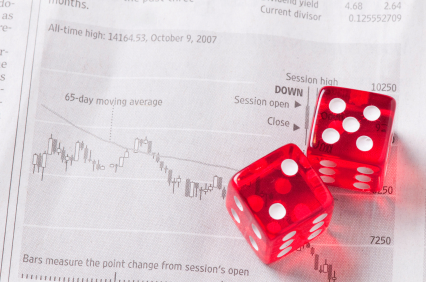
These “experts” promote the concept as if it makes perfect sense to make up for your gambling losses by doubling your bets.Gambling On Wall Street

To me, it’s appalling that anyone would advise those who are already retired to gamble their life’s savings on the volatile, risk-filled world of Wall Street.

But my message – that Wall Street is unstable and potentially as explosive as nitroglycerin – is really not age specific. The stock market can (and will) blow up in your face at any age.

For most Americans – and Wall Street goes to great lengths to hide this truth – the stock market is a promise unmet.

The success myth hyped by the financial services industry is like a casino showcasing its big winners, without mentioning that the prize pool derives from the much larger pool of losers who generate huge profits for the operators, but who themselves walk away worse off than if they had stayed at home.

Money isn’t the only price that the Wall Street casino extracts from most investors

Read the rest of this page »


Physician heals his financial ills with Bank On Yourself

After losing half of his retirement savings not once, but TWICE, during the past decade, Dr. Bryan Kuns decided, “there has to be a better way.”

Dr. Bryan Kuns

Dr. Bryan Kuns

A family and occupational medicine practitioner for 25 years, the doctor realized that, at age 50, he and his wife might only have one more chance to get it right.  “I need some more guarantees than taking a chance and gambling again with my retirement,” Bryan realized.

A little over one year ago, he heard about Bank On Yourself.  Intrigued, he began reading everything he could get his hands on about the concept.  Then he requested a referral to a Bank On Yourself Authorized Advisor and a Free Analysis.

It’s an answered prayer.  I’m sleeping a lot better at night, now.  The guarantees that this program has are what I was looking for.” –Dr. Bryan Kuns

Bryan offered to share his story with you.  Whether you already use Bank On Yourself, or you’ve been considering adding it to your financial plan, you’ll learn something of value from this interview.  You can listen to the interview by pressing the play button below, or you can download the entire interview as an Mp3 and listen on your own player or iPod…

Audio clip: Adobe Flash Player (version 9 or above) is required to play this audio clip. Download the latest version here. You also need to have JavaScript enabled in your browser.

You can also download a transcript of the interview here.

In this interview, you’ll discover…


Retiring Boomers’ Savings Fall Far Short

“The 401k generation is beginning to retire, and it isn’t a pretty sight.”

That’s the conclusion of a recent Wall Street Journal study.1 But the most shocking revelation is just how big the gap is between how much retirement income people will need to maintain their standard of living… and how much they’ve actually saved:

Many have less than one-quarter of what they’ll need

And how are they dealing with this challenge?

Facing shortfalls, many are postponing retirement, moving to cheaper housing, buying less-expensive food, cutting back on travel, taking bigger risks with their investments and making other sacrifices they never imagined.” 1

Sad Baby BoomerLike Carol Dailey, who is continuing to work at age 71 because her 401(k) took a hit in the 2008 market crash.  She also cut back spending for entertainment and food, and is substituting boxed wine for the ones she used to enjoy from her favorite vineyards.

Her financial advisor is planning to help her be able to retire by shifting her assets into riskier investments that can “return 10% a year.”

Hmmm… I wonder if that’s the same financial advisor who advised her on where to invest her money prior to the 2008 market plunge?

If people could take more risk, and do it successfully, why haven’t they been doing that all along?

Isn’t that the classic definition of insanity?

How much more evidence do we need to know that 401(k)’s and “doing all the right things we were told to do financially” aren’t working?

Read the rest of this page »


The "unrealized loss" riddle

Note: this post has been updated in November 2011

-$62,734.06. That’s the “unrealized” loss we’ve had in one of the mutual funds in our retirement account, according to the statement we just received.

A $62,734.06 unrealized loss.

I keep staring at the statement, hoping that number will somehow magically turn positive.  After all, we’ve had a nice run-up in the stock market recently, and that mutual fund has one of the best long-term track records of any fund.

What the heck is an unrealized loss, anyway?

I realize I’ve lost a whole bunch of money.  And I remember working my butt off to make that money!”

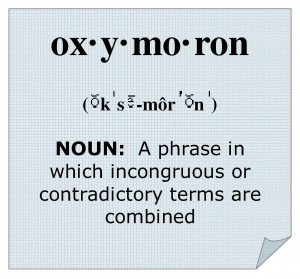
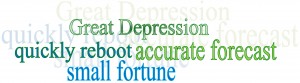
A $62,734 “unrealized loss.”  Is that an oxymoron, like “Great Depression,” “small fortune,” “accurate forecast” and “quickly reboot”?

OXYMORON definedI dunno if it qualifies as an oxymoron.  But I do know it’s moronic that we pin our hopes and plans for financial and retirement security on things we can’t predict or count on!

My husband Larry is 61 and theoretically four years away from retirement.  He probably won’t retire when he’s 65 because he says he’d get bored.  But if we were relying on the conventional wisdom about saving for retirement, it wouldn’t even be an option for him.

Did you know that 40% of retirees were forced to retire sooner than planned, due to health problems, job layoffs and other factors beyond their control?

Of course, none of us want to think that could happen to us… but what would you do if it did?

Another mutual fund in our retirement account shows an $8,012.16 “unrealized” gain.

And there lies the rub:  You don’t actually lock in a gain or loss until you sell an investment.

(November 22, 2011 Update:   Our most recent retirement account statement shows our “unrealized loss” is virtually unchanged since I wrote this blog post almost a year ago.  And looking at the Dow’s ups and downs over the past year makes a day on the roller coasters at Six Flags look tame.)

Oxymoron cloud

Unfortunately, studies and history show that most of us are far more successful at locking in our losses than our gains.

Can you tell me what your retirement account will be worth on the day you plan to tap into it?  (Not what you hope it will be.)  If your answer is “no,” how can you even call it a plan? And what will you do if the market plunges by 50% – againright before you planned to retire?

Read the rest of this page »


Sure-Fire Results: How Old Sensibilities Are Proving a Potent Balm for Modern Personal Finance Ailments

The ’10/10/10′ Formula of Savings Rescues Many Overstretched Family Budgets

Executive Summary: Most modern Americans overspend, assume too much debt, and fail to invest wisely for retirement.  Tim Austin, a leading proponent of ‘old-fashioned’ spending and savings strategies, recommends a time-tested 10/10/10 financial formula: saving 10% of gross income for the near-term; 10% for the mid-term; and setting aside 10% for the long-term.  Austin’s favorite savings tool is specially-designed dividend-paying whole life insurance policies such as those structured by Bank On Yourself’s specially trained and authorized advisors.

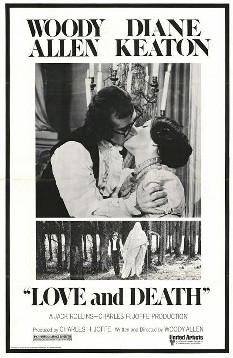
Love_and_death.jpg‎ (233 × 358 pixels, file size: 34 KB, MIME type: image/jpeg)

By Pamela Yellen and Dean Rotbart

Even back in 1975, the year comedian Woody Allen wrote, directed and starred in the movie Love and Death, the perception of whole life insurance as a savings instrument designed for fuddy-duddies and masochists was already commonplace.

There are some things worse than death”

…deadpans the film’s protagonist, Boris Grushenko, played by Allen…

If you’ve ever spent an evening with an insurance salesman, I’m sure you know what I mean”

Read the rest of this page »


When opportunity knocks, will you be ready?

In every economy – whether boom or bust – opportunities arise.  Unfortunately, most people don’t have the financial resources to take advantage of them.

This is an inspiring story of how people are using the Bank On Yourself method to be in a position to take advantage of some amazing opportunities…

Here’s a new reality: You need cash now more than ever. Not credit. Not equity. Cash.”

- “Why Cash is King,” Men’s Health, November, 2010 issue

joni-schulz-and-dave

"Bank On Yourselfers" Joni and Dave Schultz

Take Joni and Dave Schultz, who just happen to be my sister- and brother-in-law.  Joni is a hospital department supervisor and Dave just retired from his job in construction.

They came to visit us recently, and Joni’s first comment when she walked in the door was, “Now I get it!  I understand why Bank On Yourself is so much better than using a credit card or finance company, and why it’s even better than paying cash for stuff!

Joni and Dave started a Bank On Yourself policy about five years ago, in order to supplement their retirement income and add predictability to their financial plan.

But they’d never used it to finance any purchases… until now.

Opportunity knocks…

Read the rest of this page »


Dow 11,000: Déjà vu all over again?

Bill Clinton was President, the world awaited the potentially disastrous consequences of the Y2K computer bug, and – oh, yeah – the Dow closed above 11,000 for the first time in history.Yogi Berra

The date was May 3rd, 1999, and to quote Yogi Berra, nearly eleven years later,

This is like deja vu all over again


The Wall Street spin-makers are pointing out what a “big accomplishment it is for a measure that was below 7,000 only a year ago” to recapture the 11,000 level.

Before we pop the cork on a bottle of champagne, here’s a few sobering questions to ask yourself…

Read the rest of this page »


Bank On Yourself: A financial plan you can count on

Oh what a roller-coaster year this has been!  Our entire financial system and economy almost fell off a cliff.Bailout

And while there are some hopeful signs of new life in the economy, this year has also brought us:

  • Massive bailouts
  • A tripling of an already-bloated federal deficit
  • A falling dollar
  • Rising foreclosures (and likely to spike as billions of dollars in ARM’s are now coming up for adjustment)
  • Major banks and investment houses taking on three times (!) the risk they were before the collapse

So what do you think next year has in store for us?

No one really knows for sure.  (Well, except maybe the folks at the Psychic Hotline.)  So how do you prepare for a very uncertain future?
Here’s a quick quiz that may reveal an answer for you…

What’s the one financial asset that increased in value during the market crash of 2008?  And in 1929?  And in every period of economic boom and bust in between?

Answer:  The product used for Bank On Yourself:  Cash-value life insurance.

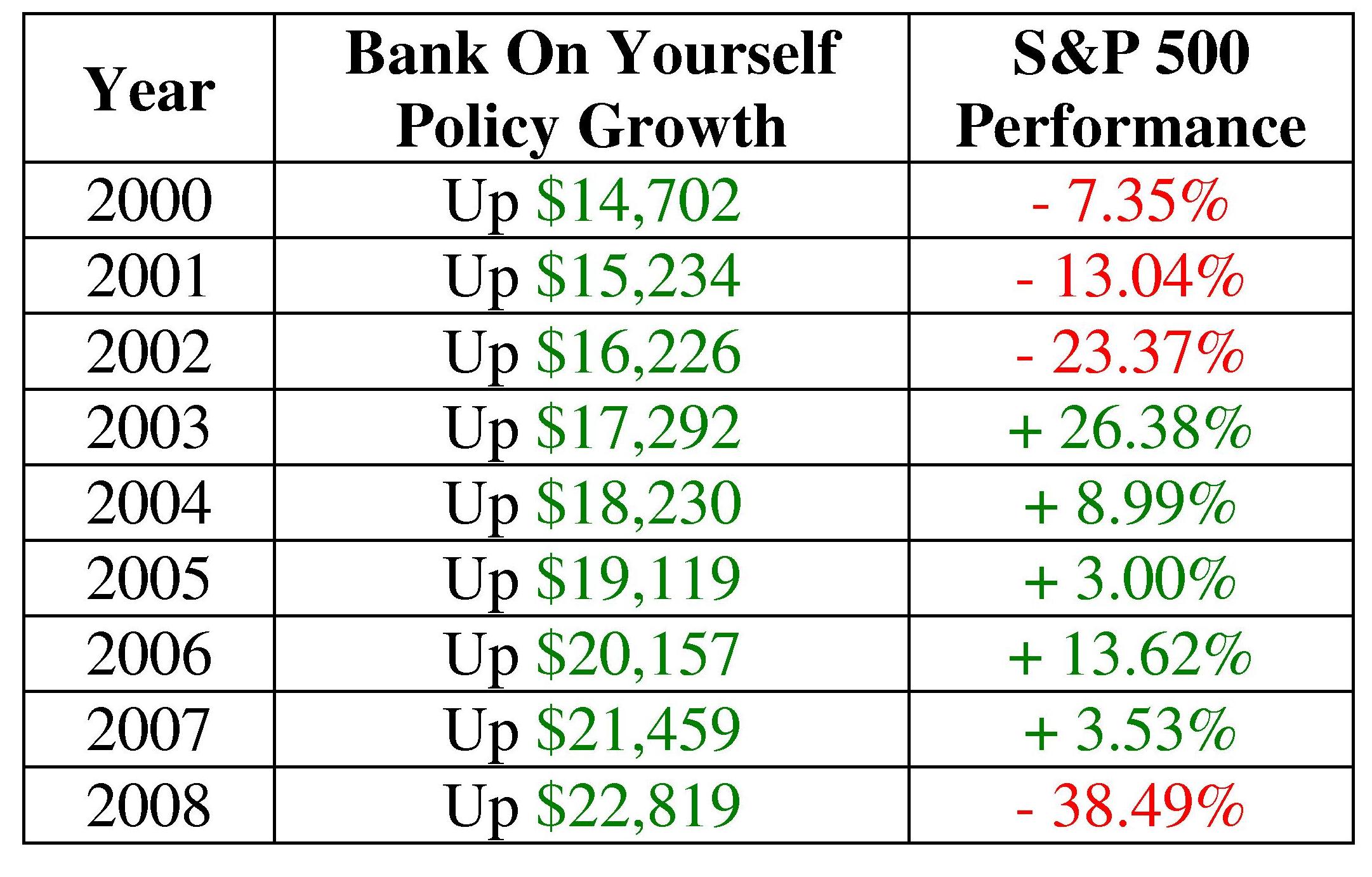
As I’ve mentioned, my husband Larry and I now have 18 Bank On Yourself policies.  I’ve picked one of them to show you how a dividend-paying whole life policy like this can grow over time – even when the markets are plummeting.  It’s a great example of how Bank On Yourself gives you the peace of mind that lets you sleep at night.

Here’s how much this plan has grown each year since the beginning of 2000, a period that includes not one, but TWO devastating market crashes.  In four of these years, the S&P 500 was down for the year, as you can see in this side-by-side comparison:

chart

If you had put $10,000 into an S&P 500 Index fund at the beginning of 2000, how much do you think it would be worth today?

Take a guess before you read on.

Read the rest of this page »


How to stay safe and sane during the financial crisis…

How are folks who use Bank On Yourself faring today, during the greatest destruction of household wealth in history?

I just heard from the Wilder family, who told me how they “stayed sane” during the market crash:

We have had Bank On Yourself plans for about three and a half years. They were what kept us sane during the stock market crash of 2008. Everything that was not in Bank On Yourself policies lost 32%, debbie-wilder-and-family-kennedy-space-centerbut all of our Bank On Yourself policies grew. Our goal with it is to be free of all interest payments to lenders and to secure a retirement income stream we can count on. We have used the plans to purchase a new car and pay off our mortgage. It’s a pleasure to know our car cannot be repossessed and our home cannot be foreclosed on.”

Find out how people of all ages, incomes and backgrounds have taken back control of their financial future in my New York Times, Wall Street Journal, USA Today and Business Week best-selling book, Bank On Yourself:  The Life-Changing Secret to Growing and Protecting Your Financial Future