Dust off your Dow 10,000 cap again

August 25, 2010 by Pamela Yellen · 5 Comments 

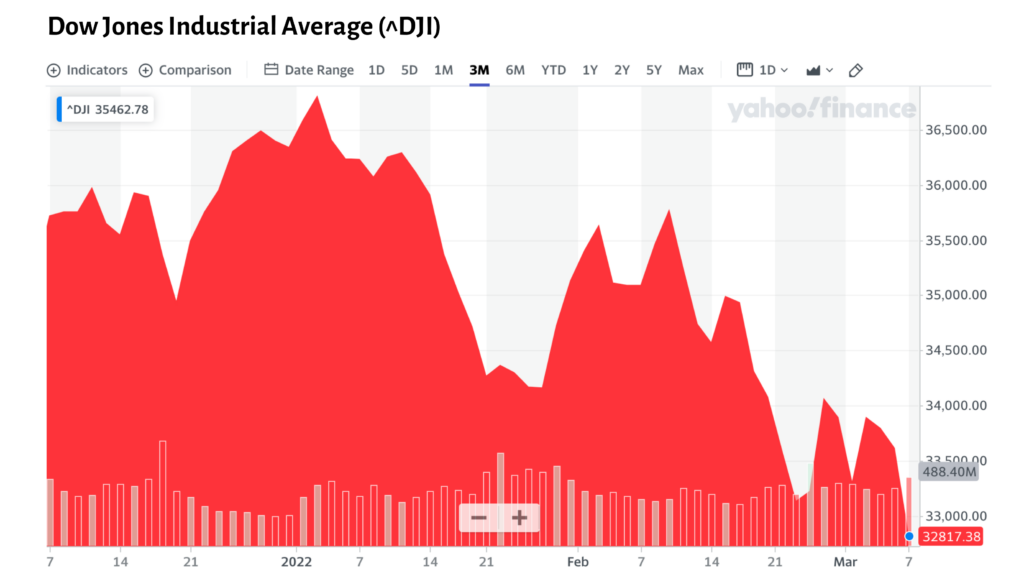
As I write this, the Dow is flirting yet again with the 10,000 level – something it has done dozens of times since it first closed above that threshold more than 11 years ago!Dow 10,000 Commorative Hat

People are understandably nervous, as evidence abounds that the economic recovery is faltering.

An astonishing fact was revealed in a cover story in “The Hulbert Financial Digest” July issue, titled, “Slow and steady wins the race.” The digest is an independent rating service that has tracked investment newsletters for the past 30 years.

It turns out that, “the investment advisor in first place for risk-adjusted performance over the last 30 years has been largely in cash for more than two decades.”

What does that mean? It means that, unless you were willing to take on lots of risk and volatility, you would have been better off burying your money in the backyard in mason jars for the past three decades!

It means that, unless you were willing to take on lots of risk and volatility, you would have been better off burying your money in the backyard in mason jars for the past three decades! (

What passes as a pathetic excuse for financial and retirement “planning” was exposed in this month’s issue of Kiplinger’s Personal Finance magazine1.

The article profiled a California couple working with a financial and money management firm to ensure they have enough money to retire in two years, when the husband turns 62.

The article details all the steps the couple has taken to properly plan for this event over the last ten years. The husband summarizes it by saying…

Huh?!?! Isn’t that like scraping and saving your hard-earned dollars for decades, stuffing them all in a sack, and dropping it on a craps table in Vegas??

Yet this is what passes for financial “planning”

It may come as no surprise that a new survey by Senior Market Advisor Magazine revealed that 55% of seniors currently without an advisor said there’s “absolutely nothing [an advisor] could do to earn their business.”

I was recently asked by Selling to Seniors magazine to comment on this.  My response shocked the editor – and it will probably shock you, too.  You can read it here, along with two overlooked options available to seniors who want to be sure their money will last as long as they do.

Another recent article on, “The Great Stock Myth, in The Atlantic2 revealed that, “even after a decade of lousy returns and a spectacular market crash, more than a quarter of Americans expect annual returns in the stock market to average 10 to 20 percent.”

The article points out that if the stock market’s return over the next decade or so is 2 to 3 percent above inflation, as some experts are predicting

“You’ll need to save close to 40 percent of your annual income to replace almost half of your income”

The article concludes, “whether Americans know it or not, they have spent decades basing their retirement plans on expectations of big capital gains in their houses and stock portfolios. Unless we suddenly become willing to save a huge chunk of our income every year, we may need to rethink our retirement plans.”

Housing fades as a means to build wealth

An article this week in The New York Times3 discusses why housing values are likely to only keep up with inflation and may ultimately return the money an owner put in, but will not multiply the investment.Housing fades a a means to build wealth

This is actually nothing new. I have written about this for the past five years.  Home prices have only appreciated around one percent more than inflation each year for the past century, according to Robert Shiller, co-creator of the Case–Shiller home price index.

So, if you can’t count on the stock market or real estate values to fund your retirement, what can you count on?

You can Bank On Yourself

Bank On Yourself is based on a twist on an asset class that has increased in value every single year for more than a century – including every period of economic boom and bust:  dividend paying whole life insurance.

The Bank On Yourself concept involves adding little-known riders and options to the policy that supercharge the growth of your equity (“cash value”) in the policy – especially during the early years of the policy.

This lets you use it as a powerful financial management tool from day one.

The growth in these policies is not only guaranteed and predictable, it is also exponential – it gets better every single year – and no luck, skill or guesswork is required.

It gives you peace of mind when planning for retirement, because you can know the minimum guaranteed income you can take – and for how long you can take it.

Plus, you can get your hands on that money with little or no tax consequences under current tax law.

However, no two plans are alike.  Each one is custom tailored to help you achieve as many of your short-term and long-term goals as possible – in the shortest time possible.

If you haven’t already requested a FREE Analysis, why not do so today?  There’s no obligation to find out what your bottom-line numbers and results could be if you added Bank on Yourself to your financial plan.

Still have a few questions?

Find the answers here:

1 “Get a Jump on Retirement” – Kiplinger’s Personal Finance, August 2010
2 “The Great Stock Myth” – The Atlantic, August 13, 2010
3 “Housing Fades as a Means to Build Wealth” – The New York Times, August 22, 2010

SocialTwist Tell-a-Friend

Four fascinating facts that affect your finances

July 20, 2010 by Pamela Yellen · 4 Comments 

I just came across these four surprising new facts that affect your money and finances…

Fascinating Fact #1: 61% of boomers fear outliving their money in retirement more than they fear death

That’s according to a new study.1

Maybe you’re one of them.  It appears that lots of boomers should be scared out of their wits – almost half of them could run out of money in retirement, according to a new study by the Employee Benefit Research Institute.

In fact, most employees recently surveyed – regardless of age – say they aren’t saving enough money for retirement.2

Many people are adjusting to “the new normal” by postponing retirement.

No more meals outBut you may not have a choiceNearly four in ten retirees say they were forced out of work earlier than they’d planned, because of layoffs, poor health, or the need to take care of a loved one.3

And, for those already retired, 60% say they have been forced to do without things they had taken for granted, to make ends meet.4

Things like meals out, new books and movies, travel, new clothes and home improvement projects.

Can you live without those things?  Sure.

But why should you have to, after a lifetime of hard work and sacrifice?!?

Read more

SocialTwist Tell-a-Friend

Famous people who use the Bank On Yourself method

June 30, 2010 by Pamela Yellen · 11 Comments 

There’s one surprising thing Walt Disney, J. C. Penney and the Pampered Chef have in common – they all used the Bank On Yourself method to start, grow and/or finance their businesses!Pampered Chef

Walt Disney borrowed from his life insurance in 1953 to help fund Disneyland, his first theme park, when no banker would lend him the money.1

Following the 1929 stock market crash, famous retailer J. C. Penney borrowed from his life insurance policies to help meet the company payroll.2 Had he not had ready access to capital, the company probably would have been forced to close its doors, adding even more people to the unemployment line.

In 2002, Doris Christopher sold her kitchen tool company, the Pampered Chef to Warren Buffett for a reported $900 million.  Seven years earlier, she launched the company with a life insurance policy loan.3

Foster Farms was founded in 1939 when Max and Verda Foster borrowed $1,000 against their life insurance policy to buy an 80-acre farm near Modesto, CA.4

Senator John McCain secured initial campaign financing for his presidential bid by using his life insurance policy as collateral.3

So-called “permanent” or cash value life insurance (versus term insurance, which is like renting insurance) builds up cash value that policy owners can use in difficult times as a ready source of money to cover personal or business expenses for emergencies and even to cover insurance costs.

Read more

SocialTwist Tell-a-Friend

Hold your financial course or change your course?

June 15, 2010 by Pamela Yellen · 5 Comments 


“Those who can't remember the past are condemned to repeat it.” - George Santayana

The Dow has dropped below 10,000 several times recently – a level it first reached more than eleven years ago and has since bounced over and back an astonishing 63 times!

Millions of people who were counting on their homes to help fund their retirement now have no equity to count on, because they owe more than their homes are worth.

Credit is still extremely tight for both businesses and consumers, underscoring just how little control we have when we have to rely on other people’s money.

As we face continuing economic challenges, many people are wondering… what does the future hold?

Ever hear the old saying, “Change is the only constant?”  Today that is clearly true more than ever!  Stephen Covey, author of the run-away best seller, Seven Habits of Highly Effective People, tells the following story:

Read more

SocialTwist Tell-a-Friend

How will the debt crisis affect Bank On Yourself?

May 13, 2010 by Pamela Yellen · 22 Comments 

A question we are getting frequently right now is how safe is your money in a Bank On Yourself plan if the debt crisis in Europe continues and spreads to the United States?

Let’s start by answering the question…

What do life insurance companies invest in

Life insurance companies are highly regulated and required to maintain sufficient reserves to ensure they can pay all future claims.

They are regularly audited by the state insurance commissioners’ offices, and sometimes by dozens of states, to ensure they are on solid financial ground.  And a multi-layer safety net exists to assure your money in a life insurance policy is secure.Safety Net

You may be wondering, “What about AIG?”  Many people missed the fact that AIG’s problems were caused by a holding company, not its life insurance subsidiaries.  Their insurance companies were walled off from the problems, have always been solvent and did not receive a bailout.

The companies recommended by Bank On Yourself Authorized Advisors are among the financially strongest life insurance groups in the world.

They enjoy some of the strongest surplus positions in the industry, approximately double the industry average.

These companies are, in essence, owned by policyowners, rather than stockholders, which allows them to focus on the long-term interests of policy holders, rather than the short-term demands of Wall Street.

Here’s what the companies used for Bank On Yourself invest in:

Read more

SocialTwist Tell-a-Friend

Dow 11,000: Déjà vu all over again?

April 12, 2010 by Pamela Yellen · 13 Comments 

Bill Clinton was President, the world awaited the potentially disastrous consequences of the Y2K computer bug, and – oh, yeah – the Dow closed above 11,000 for the first time in history.Yogi Berra

The date was May 3rd, 1999, and to quote Yogi Berra, nearly eleven years later,

This is like deja vu all over again

The Wall Street spin-makers are pointing out what a “big accomplishment it is for a measure that was below 7,000 only a year ago” to recapture the 11,000 level.

Before we pop the cork on a bottle of champagne, here’s a few sobering questions to ask yourself…

Read more

SocialTwist Tell-a-Friend

Bank On Yourself: A financial plan you can count on

December 11, 2009 by Pamela Yellen · 24 Comments 

Oh what a roller-coaster year this has been!  Our entire financial system and economy almost fell off a cliff.Bailout

And while there are some hopeful signs of new life in the economy, this year has also brought us:

  • Massive bailouts
  • A tripling of an already-bloated federal deficit
  • A falling dollar
  • Rising foreclosures (and likely to spike as billions of dollars in ARM’s are now coming up for adjustment)
  • Major banks and investment houses taking on three times (!) the risk they were before the collapse

So what do you think next year has in store for us?

No one really knows for sure.  (Well, except maybe the folks at the Psychic Hotline.)  So how do you prepare for a very uncertain future?

Dollar collapseHere’s a quick quiz that may reveal an answer for you…

What’s the one financial asset that increased in value during the market crash of 2008?  And in 1929?  And in every period of economic boom and bust in between?

Answer:  The product used for Bank On Yourself:  Cash-value life insurance.

As I’ve mentioned, my husband Larry and I now have 18 Bank On Yourself policies.  I’ve picked one of them to show you how a dividend-paying whole life policy like this can grow over time – even when the markets are plummeting.  It’s a great example of how Bank On Yourself gives you the peace of mind that lets you sleep at night.

Here’s how much this plan has grown each year since the beginning of 2000, a period that includes not one, but TWO devastating market crashes.  In four of these years, the S&P 500 was down for the year, as you can see in this side-by-side comparison:

chart

If you had put $10,000 into an S&P 500 Index fund at the beginning of 2000, how much do you think it would be worth today?

Take a guess before you read on.

Read more

SocialTwist Tell-a-Friend

Bank On Yourself success story video

December 2, 2009 by Pamela Yellen · 9 Comments 

In my best-selling book on Bank On Yourself, a number of folks shared the personal and intimate details of how they’ve been using Bank On Yourself to reach a variety of short-term and long-term personal and financial goals and dreams.

Perhaps one of the most inspiring stories was shared by Greg and Christy Gammon. Since I interviewed them, their lives have taken some interesting twists and turns, and their Bank On Yourself policies have come to the rescue in surprising ways.

This short video update, filmed during my national book tour, reveals the details. Just click the play button below…

There's no obligation on your part

There's no obligation on your part

No two Bank On Yourself plans (policies) are alike. Each is custom-tailored, so yours would be uniquely suited to your goals and dreams. It’s easy to find out what your bottom-line numbers and results could be. Simply request your free Analysis here… and take the first step towards taking back control of your financial future. Why not do it now, while it’s fresh on your mind?

SocialTwist Tell-a-Friend

Six Frequently Asked Questions about Bank On Yourself

November 13, 2009 by Pamela Yellen · 6 Comments 

I thought you might find it helpful to have the answers to the six questions about Bank On Yourself FAQwe’re most often asked – right at your fingertips.

How many of these questions have you been wondering about?

FAQ #1: FAQ? How does Bank On Yourself compare with traditional investing and savings strategies?

You can compare the Bank On Yourself method to traditional investments here, including stocks and mutual funds, a 401(k), a ROTH plan, real estate, gold, commodities and several other investments.

If there’s a different financial product or strategy that you think can match or beat the Bank On Yourself method, I encourage you to take the $100,000 Challenge. If you’re right, you could pick up an easy $100K!

FAQ #2: FAQ? How does Bank On Yourself let you recapture every penny you pay for major purchases like cars, vacations, business equipment or a college education?

I’ve summarized this in a short video overview of how Bank On Yourself works.

However, for a more detailed explanation, you’ll want to review Chapters 2, 6, and pages 52-54 of my best-selling book, Bank On Yourself. If you don’t have the book, we offer a 35% discount on it.

FAQ #3:FAQ? I’ve heard people like Dave Ramsey and Suze Orman say whole life insurance is a lousy place to put your money. Is a Bank On Yourself-type policy different from the kind they’re talking about?Let's review the facts

Read more

SocialTwist Tell-a-Friend

Videos reveal how Bank On Yourself turns dreams into reality

November 5, 2009 by Pamela Yellen · Leave a Comment 

I think you’ll find the two short videos I’ve posted here of special interest, if you’ve been wondering how you’re going to reach your financial goals in today’s challenging environment.

The first video (filmed during my national book tour) reveals how the Corey Family is using Bank On Yourself to accomplish a number of goals and dreams, including:

Just click the play button below to find out how the Corey’s are doing all this…

Please enable Javascript and Flash to view this Viddler video.

No two Bank On Yourself plans (policies) are alike. Each is custom-tailored, so yours would be uniquely suited to your goals and dreams. It’s easy to find out what your bottom-line numbers and results could be. Simply request your free Analysis here… and take the first step towards taking back control of your financial future. Why not do it now, while it’s fresh on your mind?

Now find out how the Bowsher Family used Bank On Yourself to help raise $100,000 for their church

Read more

SocialTwist Tell-a-Friend

Next Page »